
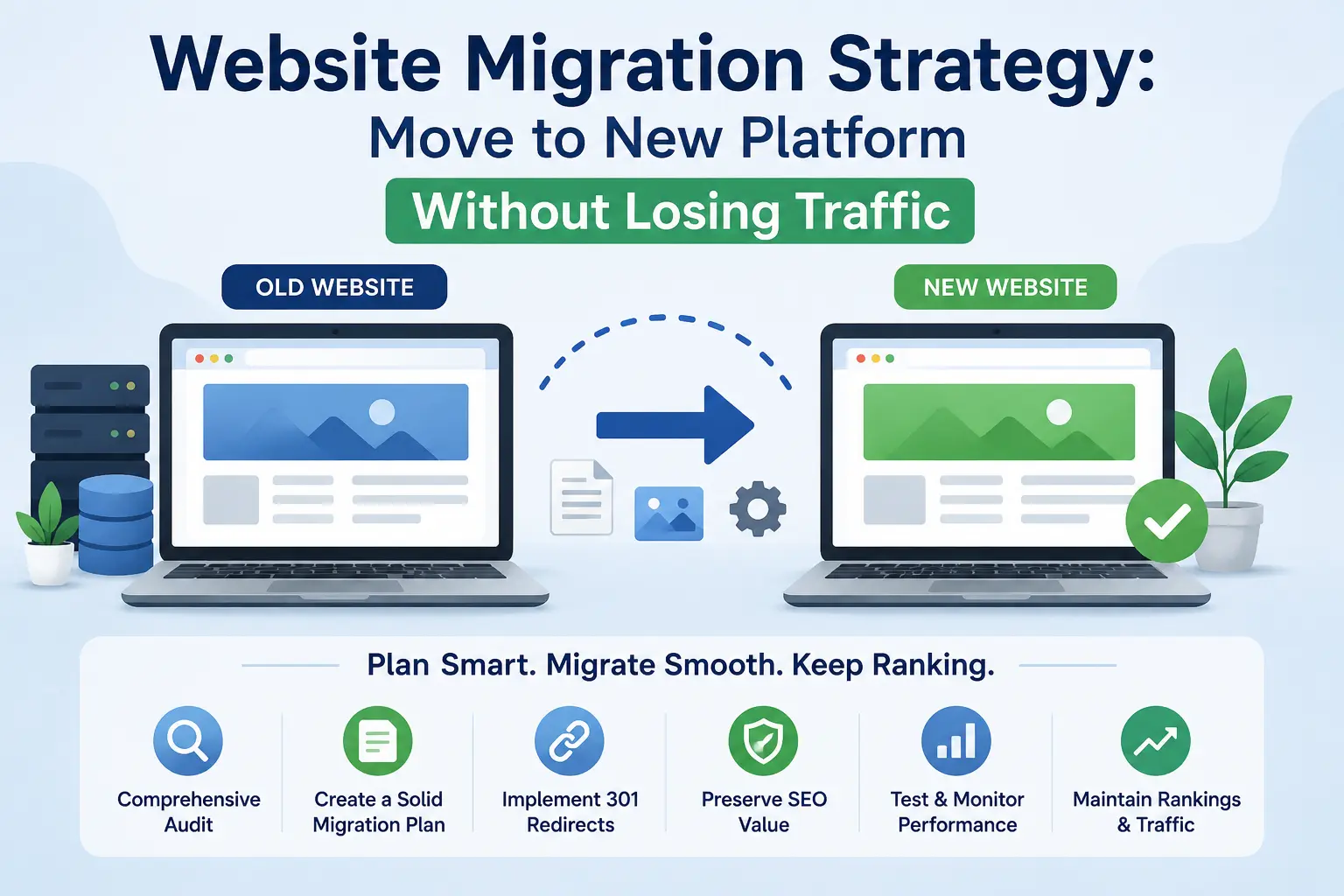
Moving your website to a new platform sounds simple until your organic traffic drops overnight. A poorly planned migration can undo years of SEO work in a matter of days. Whether you’re switching CMS platforms, redesigning your site, or moving to a new domain, a solid website migration strategy is what separates a smooth transition from a traffic disaster.
For businesses in Kochi and beyond that depend on organic search for leads, this isn’t something to take lightly. In this guide, we’ll walk through a complete, practical approach to migrating your website while protecting your rankings, traffic, and revenue. If you need expert hands to manage this process, Teknoppy’s SEO services in Kochi can help you plan and execute a safe migration from start to finish.
A website migration is any major change that affects your site’s structure, technology, content, or location on the web. This includes moving to a new CMS, changing your domain name, switching from HTTP to HTTPS, merging websites, or completely redesigning your existing site.
Search engines treat these changes as signals. If Google can’t properly recrawl and reindex your new site, your rankings can drop, indexed pages can disappear, and organic traffic can fall sharply. A website migration strategy exists to prevent exactly this by mapping out every technical and SEO step in advance, rather than reacting to problems after they happen.
Before you migrate, it helps to know which category your project falls under, since each type carries different risks.
Moving from one content management system to another — for example, from a custom-built site to WordPress or Shopify. This is one of the most common triggers for a platform migration best practices review, since URL structures and page templates often change.
Changing your domain name entirely, such as moving from an old brand domain to a new one. This is one of the riskiest migration types and needs a detailed domain migration guide with proper redirects.
Keeping the same domain but changing design, layout, and sometimes URL structure. Even without a domain change, redesign SEO tips still apply because content and internal linking often shift.
Moving from HTTP to HTTPS, or from a subdomain to a subfolder structure. Smaller in scope, but still requires careful redirect mapping.
Merging multiple websites into one, or splitting a large site into separate properties.
A successful migration starts long before the new site goes live. This website migration checklist covers the groundwork your team should complete first.
This audit stage is where most SEO checklist for website migration failures actually begin — teams skip documentation and lose the ability to compare before-and-after performance.
Knowing how to avoid SEO loss during migration comes down to protecting three things: crawlability, link equity, and content relevance.
Keep old and new content aligned. If a page’s topic changes significantly during migration, its rankings may not transfer even with a correct redirect. Try to keep core topics and target keywords consistent for pages that already rank well.
Avoid duplicate content issues. Running old and new versions of a site simultaneously without proper canonical tags can create duplicate content problems. Use canonical tags correctly and block the staging environment from being indexed.
Don’t change too much at once. Migrating your platform, redesigning your content, and changing your domain all in a single move makes it far harder to diagnose what caused a ranking drop if something goes wrong. Where possible, phase these changes separately.
Preserve backlinks. Reach out to major referring sites to update links pointing to old URLs where feasible, especially for high-authority backlinks that took years to earn.
The work doesn’t end at launch. A structured post-migration SEO audit should run for at least 8 to 12 weeks after go-live.
Monitor these areas closely:
Fix issues quickly. Redirect any newly discovered 404s, resubmit affected URLs for indexing, and correct any canonical or robots.txt misconfigurations as soon as they’re found. Small technical issues caught early rarely cause lasting damage — issues left unresolved for weeks can compound into real traffic loss.
If your business is also planning a visual overhaul alongside the technical move, pairing your migration with a professional web design company in Kochi ensures design and SEO decisions are made together, not in conflict.
How long does a website migration take? A typical migration takes anywhere from 4 to 12 weeks depending on site size, the amount of content being moved, and whether a domain change is involved. Larger e-commerce or content-heavy sites generally need more testing time.
Will I lose rankings after migrating my website? Some temporary ranking fluctuation is normal as search engines recrawl and reindex your site. With a correct 301 redirect strategy and preserved content relevance, most sites recover within 4 to 8 weeks. Poorly planned migrations can cause longer-lasting losses.
Do I need to redirect every single URL? Yes. Every indexed URL on your old site should have a corresponding 301 redirect to its most relevant new URL. Redirecting everything to the homepage is one of the most common causes of traffic loss after migration.
Can I migrate my website and redesign it at the same time? You can, but it increases risk because it becomes harder to identify the exact cause if traffic drops. Where budget and timeline allow, separating platform migration from major content or design changes makes troubleshooting easier.
Should I hire an agency for website migration? If your site has significant organic traffic, backlinks, or e-commerce revenue at stake, working with an experienced team is strongly recommended. A single missed redirect or misconfigured canonical tag can cost weeks of recovery time.
A website migration doesn’t have to mean a traffic setback. With a documented website migration strategy, a complete redirect map, careful content preservation, and consistent post-launch monitoring, you can move to a new platform, domain, or design while keeping your search visibility intact.
If you’re planning a migration and want an experienced team managing the SEO side of the transition, get in touch with Teknoppy’s team for a strategy session, or explore our full range of digital marketing and SEO services to see how we support businesses through platform changes, redesigns, and beyond.
For brands also refreshing their identity during the move, our branding services and content writing services can help keep your messaging consistent across the new site. You can also read our related post on choosing the right SEO agency in Kochi if you’re still evaluating who should manage your migration.

Communicate with our experts to bring out better solutions to your problem.
 +91 6282249224
This will close in 0 seconds


