
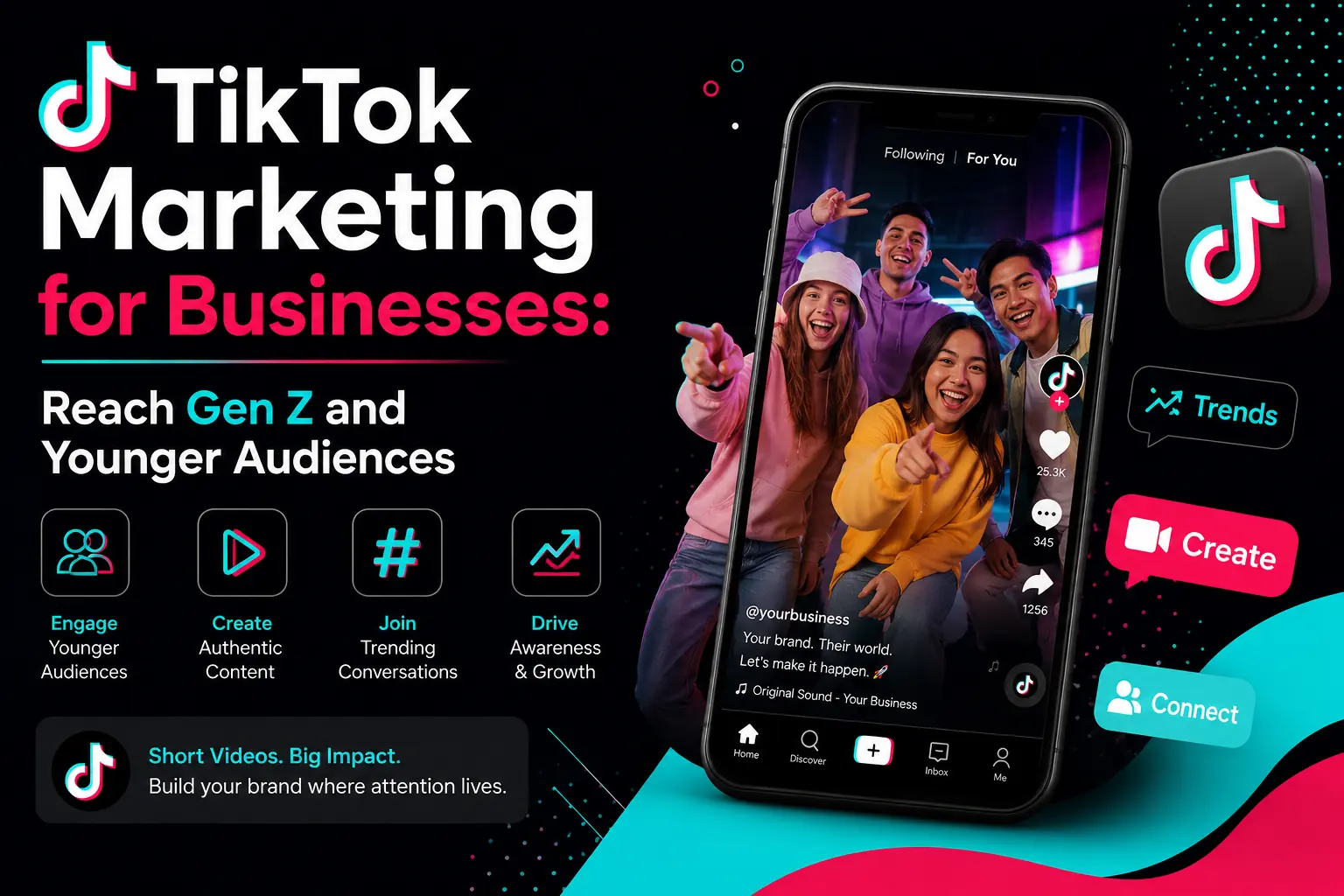
If your brand isn’t on TikTok, there’s a real chance an entire generation of potential customers doesn’t know you exist. TikTok marketing for businesses has moved well past dance trends into a serious channel for brand discovery, especially among Gen Z and younger millennials. This guide breaks down how businesses can build a genuine TikTok presence, from content strategy to paid ads, without wasting budget on tactics that don’t fit the platform.
TikTok has become a primary discovery engine for younger audiences, with many users searching the app directly for product recommendations and reviews the way older generations might use Google. TikTok marketing for businesses matters because ignoring this shift means missing the exact audience segment that increasingly makes purchase decisions based on short-form video content rather than traditional ads. Brands that show up authentically here build recognition well before a customer ever visits their website.
A Gen Z marketing strategy differs fundamentally from traditional advertising approaches. This audience responds to authenticity over polish, values brands that participate in culture rather than interrupt it, and disengages quickly from anything that feels like a scripted ad. Successful Gen Z marketing strategy on TikTok means thinking like a creator first and a brand second, prioritizing entertainment or genuine usefulness over direct selling in most content.
Learning how to market on TikTok starts with setting up a TikTok Business account, which unlocks analytics, ad tools, and a commercial music library. From there, spend time simply watching content in your niche before posting anything, since understanding current trends, sounds, and formats is essential to blending in rather than looking obviously out of place. Businesses that skip this research phase often produce content that feels disconnected from how the platform actually works.
An effective TikTok content strategy for brands mixes a few consistent content types: behind-the-scenes looks at your business, quick educational tips related to your industry, trending audio paired with relevant visuals, and light, personality-driven content that humanizes the brand. Consistency matters more than production value here, since the platform’s algorithm favors regular posting and genuine engagement over occasional highly polished videos.
A few TikTok algorithm tips for brands can meaningfully improve reach: post consistently rather than in bursts, hook viewers in the first two to three seconds since watch time heavily influences distribution, and use relevant, specific hashtags rather than only broad ones. Engaging genuinely with comments and other creators in your niche also signals activity that the algorithm rewards with wider distribution over time.
TikTok advertising for small business offers several formats, including in-feed ads that blend with organic content, branded hashtag challenges, and spark ads that boost existing organic posts. In-feed ads and spark ads tend to work best for smaller budgets, since they leverage content that already performs organically rather than requiring an entirely separate ad-only production. Starting with a modest budget to test which content style resonates before scaling spend is a practical approach for most small businesses new to the platform.
A practical TikTok ads guide starts with matching campaign objectives to business goals: awareness campaigns for brand recognition, traffic campaigns to drive website visits, and conversion campaigns for direct sales or lead generation. TikTok’s ad platform also supports detailed audience targeting based on interests and behaviors, which helps narrow reach toward the specific segment of Gen Z or younger millennials most relevant to your business.
TikTok influencer marketing often outperforms traditional brand-produced content because audiences trust creators they already follow more than branded accounts. Micro-influencers, those with smaller but highly engaged followings, frequently deliver stronger ROI than large creators for businesses with limited budgets, since their audiences tend to be more niche and responsive. Choosing influencers whose existing content style aligns naturally with your brand produces far more authentic results than forcing a mismatched partnership.
Learning how to grow a business on TikTok sustainably means treating it as a long-term content channel, not a quick campaign. Track which content types drive the most engagement and profile visits, refine your approach based on that data, and resist the urge to abandon the platform after a few underperforming posts, since consistency is what eventually triggers algorithmic momentum. This organic growth pairs well with a broader social media marketing strategy that keeps your brand consistent across platforms.
TikTok marketing tips 2026 point toward continued growth in shoppable content, longer-form videos performing better than in previous years, and increased use of TikTok as a search tool by younger users. Brands that adapt content length and searchability, using clear, descriptive captions and on-screen text, position themselves better for this shift than those still optimizing purely for short viral clips.
While TikTok often leads Gen Z engagement, an effective social media marketing for Gen Z approach usually extends content across Instagram Reels and YouTube Shorts as well, since younger audiences move fluidly between platforms. Repurposing strong TikTok content for these channels extends reach without multiplying production effort, and working with an experienced digital marketing agency can help coordinate this cross-platform strategy so messaging stays consistent everywhere your audience shows up.
Is TikTok worth it for B2B businesses, not just consumer brands? TikTok skews toward consumer audiences, but B2B brands can still benefit from company culture content and thought leadership aimed at younger decision-makers entering the workforce.
How often should a business post on TikTok? Most brands see the best results posting three to five times per week, since consistency is a major factor in how the algorithm distributes content.
Do businesses need a big budget to succeed on TikTok? No, organic content and modest ad spend on well-performing posts can produce strong results, especially compared to the higher costs typically required on more saturated platforms.
What type of content performs best for brands on TikTok? Authentic, entertaining, or genuinely useful content consistently outperforms polished, ad-style videos, since it matches what users expect from the platform.
Should every business use TikTok influencer marketing? Not necessarily. It works especially well for consumer-facing brands with visually engaging products or services, though its impact varies by industry.
TikTok marketing for businesses is no longer optional for brands trying to reach Gen Z and younger audiences authentically. From organic content strategy to targeted ads and influencer partnerships, success on the platform comes from understanding its culture rather than repurposing traditional ad approaches. If you want a TikTok strategy built around your specific audience, Teknoppy’s social media marketing team can help you plan and execute content that actually performs.

Communicate with our experts to bring out better solutions to your problem.
 +91 6282249224
This will close in 0 seconds


