
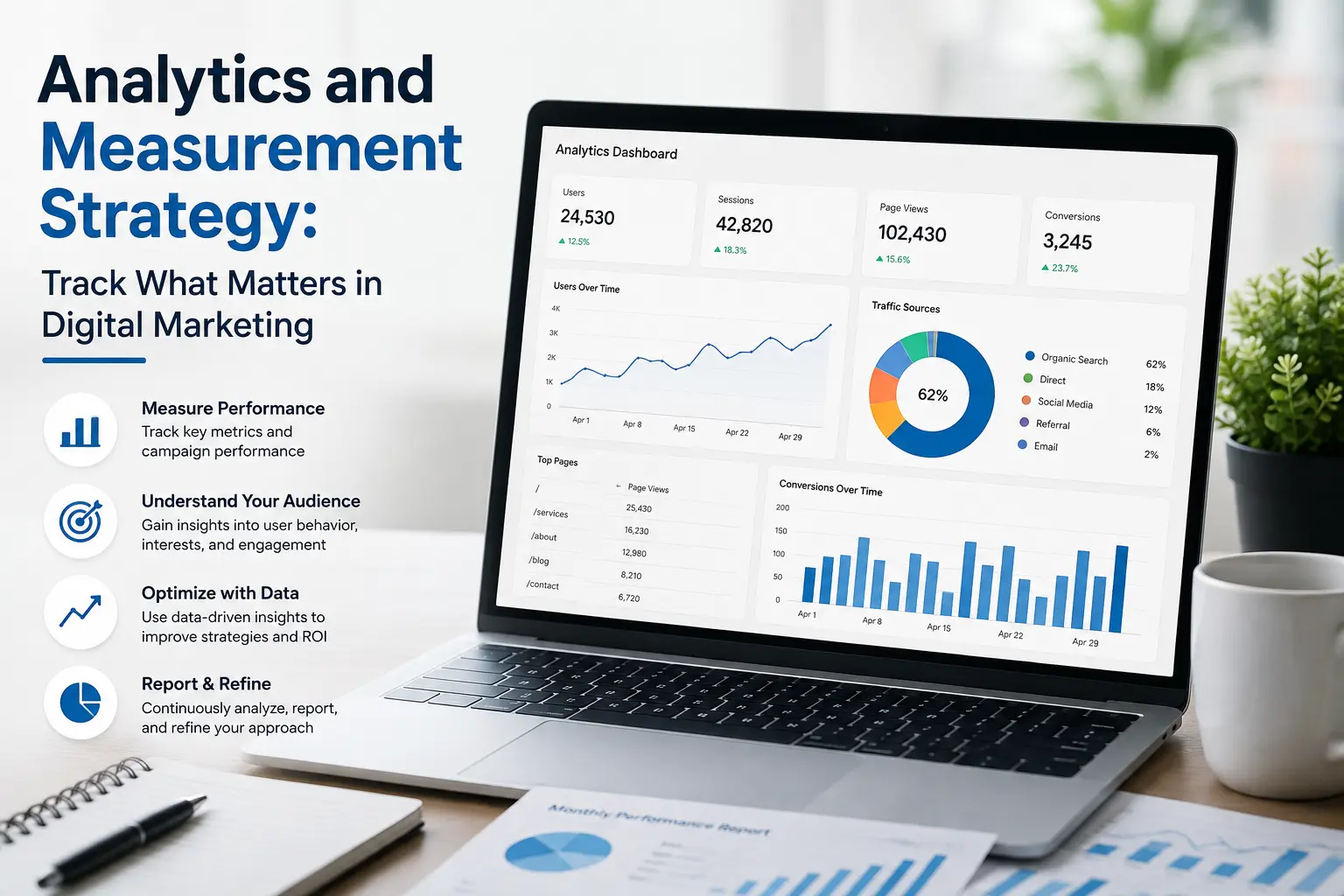
Running campaigns without a clear measurement plan is like driving with the dashboard covered. A solid analytics and measurement strategy tells you exactly what’s working, what isn’t, and where budget should move next. This guide covers how to build that strategy from the ground up, from setting up the right tools to reporting on the metrics that actually matter to your business.
Many businesses set up tracking after launching campaigns, which means the first weeks of data are often incomplete or unreliable. An analytics and measurement strategy built before launch ensures every channel, goal, and conversion point is tracked from day one. Getting this sequence right means every marketing decision from that point forward is based on real data rather than guesswork.
A solid digital marketing analytics guide starts with defining what success actually looks like for your business, whether that’s leads, sales, sign-ups, or another specific action. From there, map each marketing channel to the goals it’s meant to support, since a channel like social media might drive awareness metrics while paid search drives direct conversions. Without this mapping, it’s easy to judge every channel by the same metric, even when their roles are completely different.
Knowing what metrics to track in digital marketing depends on your business goals, but a few metrics matter across nearly every business: traffic sources, conversion rate, cost per acquisition, customer lifetime value, and bounce rate on key landing pages. Vanity metrics like raw page views or social followers look good in a report but rarely explain whether marketing is actually driving revenue, so they should support, not replace, conversion-focused metrics.
A clear marketing measurement framework organizes metrics into layers: top-of-funnel metrics like impressions and traffic, mid-funnel metrics like engagement and lead quality, and bottom-of-funnel metrics like conversions and revenue. Structuring reporting this way makes it far easier to diagnose where a campaign is underperforming, rather than looking at overall numbers and guessing which stage of the funnel needs attention.
A correct Google Analytics 4 setup guide begins with defining custom events and conversions specific to your business, since GA4’s event-based model requires more deliberate configuration than older analytics versions. Set up key conversion events such as form submissions, purchases, or calls, link GA4 to Google Ads and Search Console for a fuller picture, and configure audiences that support future remarketing. Businesses that skip proper GA4 configuration often end up with data that looks complete but is missing the specific conversions that actually matter to their goals.
Conversion tracking best practices start with tracking every meaningful action a visitor can take, not just final purchases. This includes phone clicks, form submissions, chat initiations, and downloads, all of which indicate purchase intent even before a transaction happens. Test every tracked conversion regularly to confirm it’s firing correctly, since a broken conversion tag can silently distort reporting for weeks before anyone notices the gap.
A genuine data driven marketing strategy uses analytics to guide budget allocation, not just to report on past performance. Reviewing which channels and campaigns produce the lowest cost per conversion and shifting budget accordingly turns analytics from a reporting exercise into an active growth tool. This approach works best when paired with ongoing digital marketing management, since strategy adjustments need to happen continuously as data comes in, not just at the end of a campaign.
Learning how to measure marketing ROI requires connecting marketing spend directly to revenue, which means tracking the full customer journey from first touch to final conversion, not just the last click. Attribution models vary in complexity, but even a simple first-touch and last-touch comparison reveals more than looking at conversions in isolation. Businesses running SEO campaigns alongside paid channels should track both separately, since organic and paid efforts often influence the same conversions differently.
Website analytics for small business doesn’t need to be complex to be effective. Focus on a small set of core metrics tied directly to business outcomes, set up basic goal tracking in GA4, and review data on a consistent schedule rather than sporadically. Small businesses often gain more from consistently reviewing five key metrics than from an elaborate dashboard nobody checks regularly, especially when paired with a properly built eCommerce website or lead-generation site that’s structured to track conversions cleanly from the start.
Learning how to track marketing KPIs across multiple channels means standardizing definitions first. Ensure “lead” or “conversion” means the same thing across your CRM, ad platforms, and analytics tools, since mismatched definitions create reporting confusion that undermines trust in the data. Centralizing this in one dashboard, rather than checking each platform separately, makes cross-channel comparison far more reliable.
Effective marketing dashboard reporting tips include limiting dashboards to the metrics that drive decisions, updating them on a consistent cadence, and presenting trends over time rather than single-point snapshots that lack context. A dashboard’s job is to answer specific business questions quickly, not to display every available metric, so resist the urge to add data simply because it’s available.
What is the difference between an analytics strategy and just having Google Analytics installed? Installing Google Analytics only collects raw data, while an analytics and measurement strategy defines what to track, why it matters, and how it connects to business goals.
How often should I review my marketing analytics? Most businesses benefit from a weekly high-level review and a more detailed monthly review to catch both short-term issues and longer-term trends.
What is the most important metric to track in digital marketing? There’s no single universal metric, but conversion rate tied to a clearly defined goal is usually the most actionable metric across most businesses.
Is GA4 mandatory for tracking marketing performance? GA4 is Google’s current standard analytics platform and is strongly recommended, though it should be paired with platform-specific tracking like ad platform pixels for a complete picture.
How do I know if my conversion tracking is set up correctly? Regularly test each tracked conversion manually and cross-check the numbers against actual business records, such as CRM leads or completed sales, to confirm accuracy.
A strong analytics and measurement strategy turns marketing from a series of assumptions into a system you can actually optimize. From proper GA4 setup to a clear measurement framework and honest ROI tracking, every layer helps you invest budget where it actually produces results. If your current tracking setup feels unreliable or incomplete, Teknoppy’s digital marketing team can audit and rebuild your measurement strategy from the ground up.

Communicate with our experts to bring out better solutions to your problem.
 +91 6282249224
This will close in 0 seconds


