
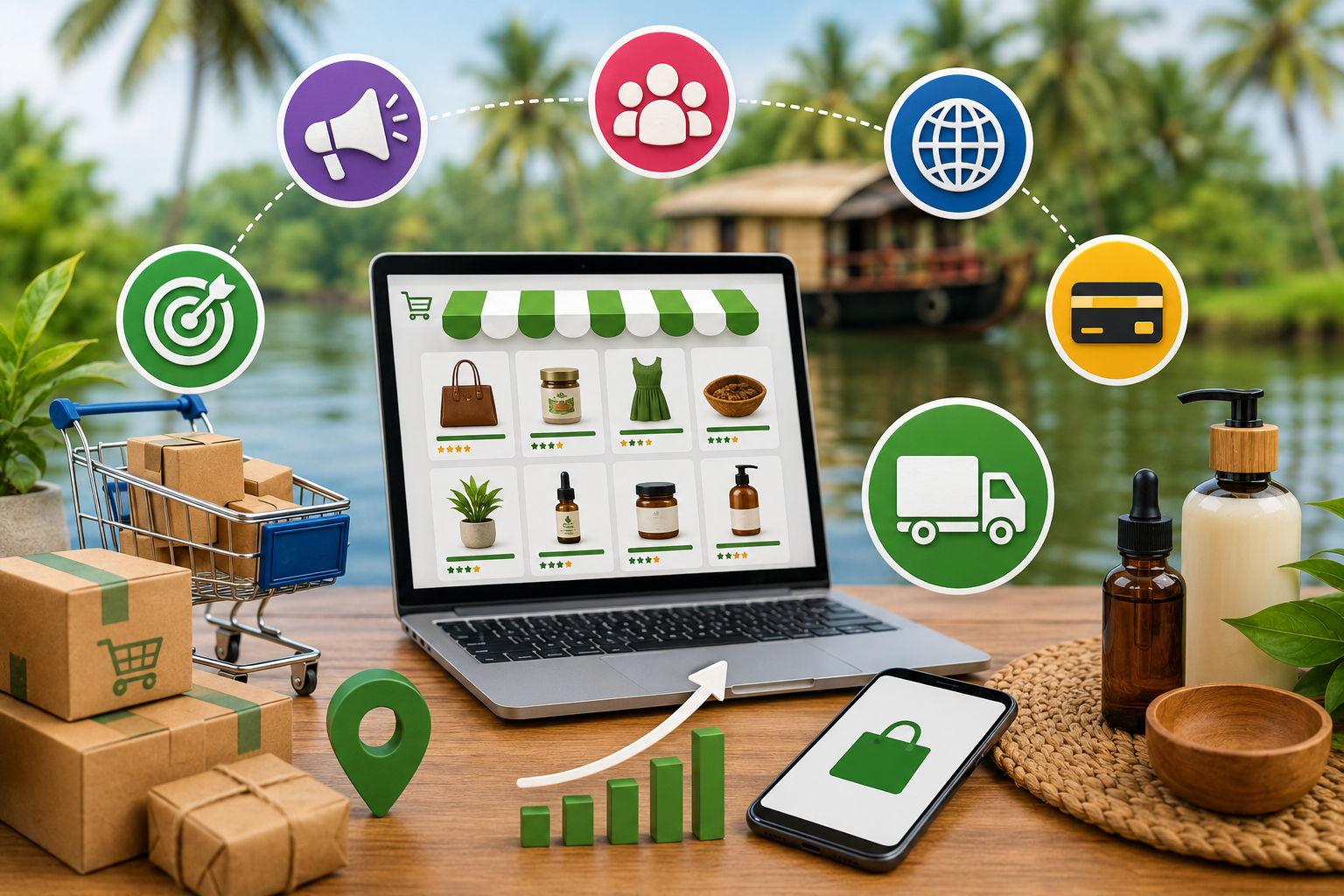
Learning How to Start Selling Online in Kerala is one of the smartest moves a small business owner can make in 2026. Customers are searching and buying online more than ever before. Better still, you no longer need a big budget or technical skills to begin. This step-by-step guide walks you through the whole process clearly, so you can turn your idea into a working online business in Kochi or anywhere across the state.
Whether you sell spices, handicrafts, apparel, food products, or services, going digital helps you reach customers far beyond your local area. Moreover, an online store works around the clock and lowers your overheads compared to a physical shop. It also gives you real data about what your customers want.
For a small business, the goal is simple. You need to get found, build trust, and make buying easy. The seven steps below show you exactly how.
Before any technology, get clarity on your product and your customer. Ask yourself what you’ll sell, who your ideal customer is, and where they are. Also ask what makes your offering different from competitors.
This clarity shapes every later decision, including your platform, pricing, and marketing. In fact, a focused niche almost always sells better online than trying to sell everything to everyone.
This is the step most beginners get wrong, so let’s be precise. To start an online store, you’ll want a registered business identity. A sole proprietorship is the simplest starting point, along with a business bank account.
On tax, the rules changed recently and depend on how you sell. Anyone selling goods through an e-commerce operator such as Amazon, Flipkart, or Meesho must register for GST, irrespective of turnover. In addition, selling inter-state — shipping outside Kerala — makes GST registration mandatory regardless of turnover. However, there is one relief route. A small seller below the threshold selling only within their own state can use an Enrollment ID on the GST portal instead of full registration. DMI Finance + 2
In practice, most sellers who ship across India or use marketplaces will need a GSTIN. Therefore, confirm your situation with a qualified Chartered Accountant before you begin.
You have two broad paths, and many businesses use both.
First, you can build your own online store using WooCommerce or Shopify. This gives you full control, better margins, and ownership of your customer data. WooCommerce is flexible and cost-effective, while Shopify is quick to launch. The trade-off is that you must drive your own traffic.
Second, you can sell on marketplaces like Amazon, Flipkart, and Meesho. These offer instant access to buyers and built-in trust. On the other hand, they come with fees, competition, and less brand control.
For most small businesses, a branded store plus a few marketplace listings works best. If you’re unsure which setup suits you, a professional eCommerce website development team in Kochi can build the right solution.
Your store is your digital shopfront. As a result, it must load fast, look professional, and build trust. The essentials include clear product photos, simple navigation, mobile responsiveness, and visible contact details.
You can start with a WordPress-based store for flexibility. Alternatively, you can invest in a custom-designed site. Either way, good web design and development directly affects how many visitors become buyers. For more help, this guide on choosing the right website design company in Kerala is a useful next read.
To accept online payments, you need a payment gateway that supports UPI, cards, net banking, and wallets. Indian customers prefer these methods. Popular options for a Kerala online store include Razorpay, PayU, Cashfree, and Instamojo.
When choosing, compare transaction fees, settlement time, integration, and support. Fortunately, most gateways integrate smoothly with both WooCommerce and Shopify. A developer can then connect and test everything so your checkout is seamless and secure.
Reliable delivery builds repeat customers. So, decide whether you’ll ship yourself or use a courier aggregator like Shiprocket, Delhivery, or DTDC. These connect you to multiple couriers at better rates. Above all, be clear about your shipping charges, delivery timelines, and return policy, because transparency reduces cart abandonment.
Building the store is only half the job, because people still need to find it. This is where most small businesses either win or stall.
A practical marketing mix starts with SEO, so your store appears when people search for your products. Strong SEO services bring free, long-term traffic. Next, add consistent social media marketing, since Instagram and Facebook work well for Kerala audiences. For faster results, run ads through professional digital marketing. Finally, invest in branding to stand out and charge better prices.
Ultimately, a consistent marketing strategy is the difference between a store that struggles and one that grows steadily.
Many first-time sellers skip GST steps and face platform delisting later. Others build slow websites that drive visitors away. Some rely only on word of mouth while ignoring SEO. Likewise, poor photos, vague descriptions, and missing return policies quietly cost sales. Avoiding these early puts you well ahead of most beginners.
In most cases, yes. GST registration is mandatory for sellers using marketplaces and for anyone shipping inter-state, regardless of turnover. Very small intra-state sellers may use an Enrollment ID instead, but confirm with a Chartered Accountant.
For your own brand, WooCommerce and Shopify are the top choices. For quick access to buyers, marketplaces like Amazon, Flipkart, and Meesho work well. Many sellers use both.
It varies with your platform and design needs. A basic store can start modestly, while custom sites cost more. The bigger ongoing investment is usually marketing.
You can start on Instagram or WhatsApp. However, a proper online store gives you credibility, better payments, and room to scale. Most serious sellers eventually build one.
Combine SEO, social media, ads, and branding. Building the store is step one. After that, consistent marketing brings in steady traffic and orders.
Knowing how to sell online in Kerala comes down to following the right steps in order. First, get clear on your product. Then handle registration, choose the best platform, build a trustworthy store, set up payments and shipping, and market consistently. Take it one step at a time, and you’ll have a real online business.
You don’t have to figure all of this out alone. As a trusted digital partner in Kochi, Teknoppy helps Kerala small businesses launch and grow online. We handle everything from store setup to SEO, social media, and ads that bring real sales.
To begin, get your store built with our eCommerce website development team and view our portfolio. Then grow your traffic by combining SEO and digital marketing. Ready to take the first step? Contact Teknoppy or call +91 62822 49224 for a free consultation today.

Communicate with our experts to bring out better solutions to your problem.
 +91 6282249224
This will close in 0 seconds


