
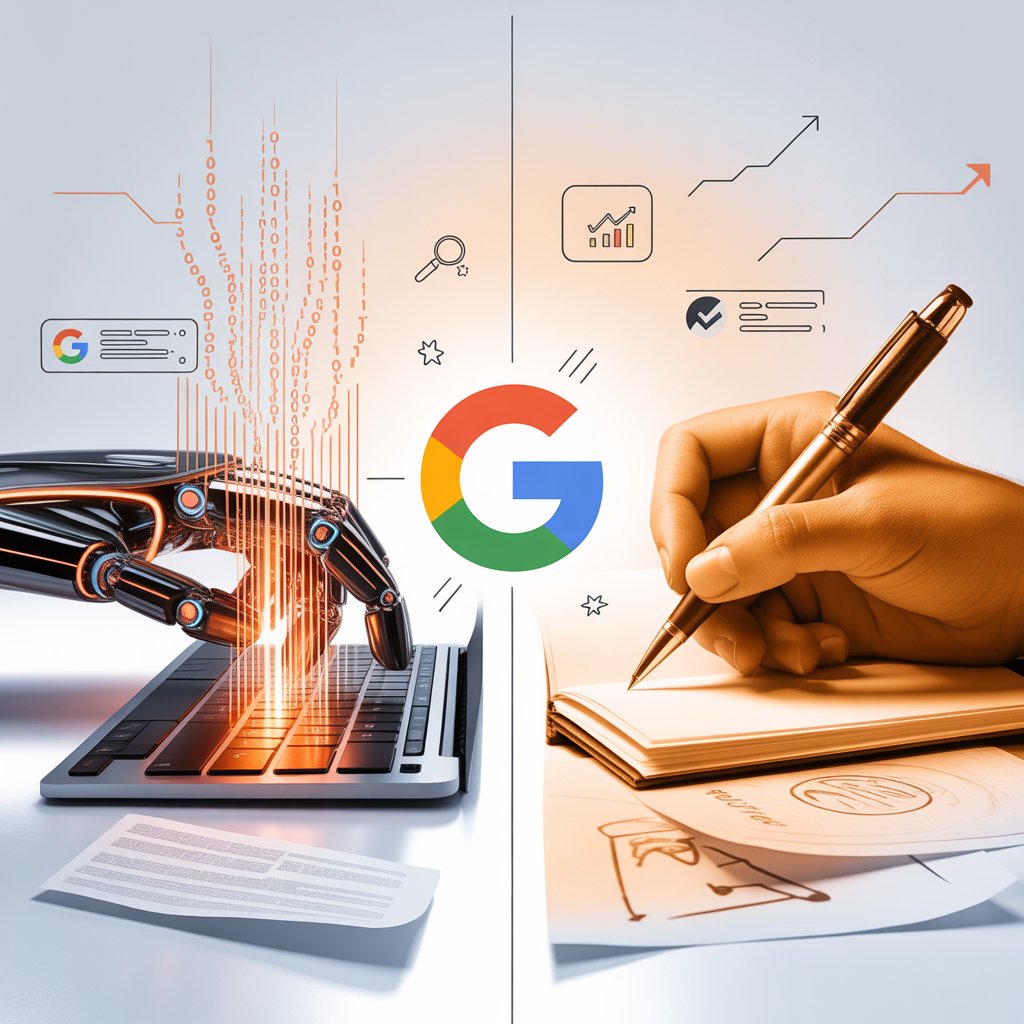
The digital content landscape has transformed dramatically, and the debate surrounding AI content vs human writers Google 2026 continues to shape how businesses approach their content strategies. Search engines have evolved beyond simple keyword matching, forcing creators to understand what truly drives rankings in today’s algorithm-driven ecosystem.
Google’s algorithm no longer distinguishes content solely based on its origin—whether crafted by artificial intelligence or human hands. Instead, the search giant has refined its evaluation criteria to focus on fundamental quality signals that serve user intent effectively.
The 2024 Helpful Content Update marked a pivotal shift, establishing that content quality matters more than creation method. This philosophy has strengthened throughout 2025 and into 2026, with Google’s systems becoming increasingly sophisticated at identifying valuable content regardless of how it was produced.
Core ranking factors now emphasize:
Artificial intelligence has matured into a powerful tool for specific content applications. Large language models produce grammatically sound, structured content at remarkable speed, making them invaluable for scaling operations.
Optimal AI Use Cases: Technical documentation that requires consistent formatting and terminology adherence benefits from AI assistance. Product descriptions across large
e-commerce catalogs maintain brand voice while highlighting specifications efficiently. Data-driven reports synthesizing numerical information transform complex datasets into digestible insights. Foundational drafts for research-intensive topics accelerate the content creation process when combined with human refinement.
AI tools process vast information repositories instantly, identifying patterns and connections that might escape initial human observation. This capability makes them exceptional research assistants, though interpretation still requires human judgment.
However, algorithmic content generation faces inherent limitations. Generic outputs lacking distinctive perspectives rarely earn top rankings. Search engines detect patterns indicating shallow treatment of subjects—content that technically answers queries without delivering meaningful value or unique analysis.
Human writers bring dimensions that current AI technology cannot replicate authentically. Personal experience forms the foundation of truly authoritative content that resonates with readers and satisfies Google’s E-E-A-T framework (Experience, Expertise, Authoritativeness, Trustworthiness).
Where Human Writers Dominate: First-hand accounts and case studies provide credibility that AI-generated scenarios cannot match. Nuanced understanding of audience psychology enables content that connects emotionally while informing intellectually. Cultural context and sensitivity prevent tone-deaf messaging in diverse markets. Original research and proprietary insights establish thought leadership that distinguishes brands from competitors.
Industry professionals sharing battle-tested strategies, entrepreneurs documenting business-building journeys, and specialists explaining complex concepts through relatable analogies create content that algorithms recognize as genuinely valuable.
Human judgment identifies emerging trends before they appear in training data, adapts messaging for specific audience segments, and makes ethical decisions about content direction that pure optimization cannot address.
Forward-thinking content strategies in 2026 leverage both AI efficiency and human expertise strategically rather than viewing them as opposing forces.
Successful workflows often follow this pattern: AI tools handle preliminary research, gathering relevant information and identifying content gaps. Human strategists develop unique angles and original frameworks that differentiate the content. AI assists with drafting structural elements and expanding outlined sections. Human editors inject personality, verify accuracy, add expert commentary, and ensure the content serves real user needs rather than just algorithmic checkboxes.
This collaboration produces content faster than purely human efforts while maintaining the quality standards that purely automated content rarely achieves.
Google’s algorithm rewards content demonstrating clear expertise through specific, actionable information rather than vague generalities. Original data, proprietary research, or unique perspectives that don’t exist elsewhere on the web signal genuine value creation.
Content that comprehensively addresses user intent—answering not just the stated question but anticipating related queries—performs consistently well. Strong user engagement metrics including time on page, low bounce rates, and return visits indicate content successfully serves its audience.
Current events integration and regular updates signal ongoing relevance, particularly for time-sensitive topics. Transparent authorship with verifiable credentials builds trust that algorithms increasingly prioritize.
The search engine’s systems detect thin content regardless of creation method. Whether produced by AI or humans, shallow treatment of topics without substantial value addition struggles to rank competitively.
Successful content programs in 2026 establish clear quality standards before creation begins. Define what expertise looks like for your niche and ensure content demonstrates it through specific examples and detailed explanations.
Implement robust editing processes that verify factual accuracy, enhance clarity, and inject authentic voice. Even AI-assisted content requires human oversight to catch errors, add nuance, and ensure alignment with brand values.
Invest in original research—surveys, experiments, data analysis—that creates genuinely unique content assets. These efforts compound over time, establishing authority that generic content never achieves.
Focus relentlessly on user satisfaction rather than gaming ranking factors. Content that genuinely helps people solve problems, make decisions, or understand complex topics naturally accumulates the signals search algorithms reward.
The distinction between AI-generated and human-written content matters less than many creators assume. Google’s algorithm evaluates the end product—does it serve users effectively, demonstrate real expertise, and provide value beyond what already exists?
The most successful content strategies use AI as a powerful tool within human-directed workflows, not as a replacement for expertise and judgment. Technology handles efficiency, while humans provide the insight, experience, and originality that transform adequate content into exceptional resources.
Ready to develop a content approach that satisfies both algorithms and audiences? Our content strategists help businesses blend AI efficiency with human expertise for maximum impact. We analyze your specific market, audience needs, and competitive landscape to build sustainable content programs that drive measurable results. Schedule a consultation to discover how strategic content development can transform your digital presence and organic visibility.

Communicate with our experts to bring out better solutions to your problem.
 +91 6282249224
This will close in 0 seconds


